
If the air in your home feels stuffy, smells stale or leaves you wondering what you are really breathing, the good news is that you can do a lot about it. Learning how to improve indoor air quality is mostly about a handful of simple habits and a few smart upgrades, not expensive renovations.
This guide is a practical, step-by-step list of 18 proven ways to improve air quality in your home. We start with free changes you can make today, move on to low-cost upgrades, and finish with bigger investments that make sense for some homes. If you want the background first, read our complete guide to indoor air quality.
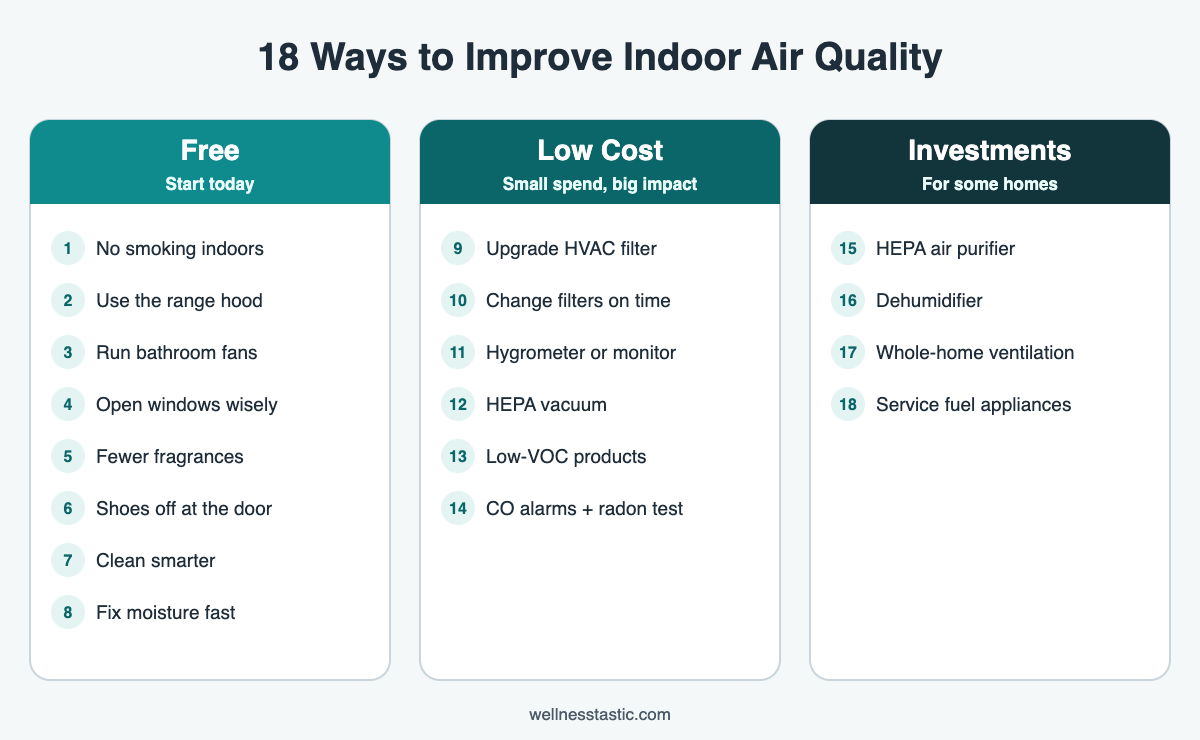
Quick answer: To improve indoor air quality, reduce pollution at the source (no smoking, fewer fragrances and chemicals), ventilate every time you cook or shower, keep humidity around 30–50%, use the best HVAC filter your system supports, and add a HEPA air purifier in the rooms you use most.
Before You Start: Measure Your Air
It is hard to fix what you cannot see. Before changing anything, spend a week getting a baseline. A basic hygrometer shows humidity, and a home air quality monitor can track fine particles (PM2.5), carbon dioxide (CO2) and VOCs. Watch what happens when you cook, clean, sleep with the door closed or open a window.
This does two things. It tells you which problems matter most in your home, and it shows you whether your changes are working. See our guide on how to test indoor air quality and our picks for the best indoor air quality monitors.
Free Ways to Improve Indoor Air Quality (Start Today)
These changes cost nothing and often make the biggest difference, because they reduce pollution before it ever reaches the air.
1. Keep smoking and vaping outside
Tobacco smoke is one of the most harmful indoor pollutants, and particles and residues cling to walls, carpets and furniture long after the smoke clears. A strict no-smoking rule indoors, including vaping, is the single biggest step for homes where it applies.
2. Use your range hood every time you cook
Cooking, especially frying, searing and roasting, releases fine particles and, on gas stoves, combustion gases. Turn on a range hood that vents outdoors before you start, use the back burners where the hood captures more, and leave it running for 10 to 15 minutes after you finish. If your hood only recirculates air, open a nearby window as well.
3. Run bathroom exhaust fans during and after showers
Showers add a lot of moisture to the air. Run the exhaust fan while showering and for about 20 minutes afterward to reduce humidity and help prevent mold. If you do not have a fan, open a window or leave the door open to let moisture escape.
4. Open windows at the right times
Fresh air dilutes pollutants that build up indoors. Even 10 to 15 minutes of cross-ventilation, with windows open on opposite sides of the home, can make a noticeable difference. Before you open up, check outdoor conditions on AirNow.gov. On days with wildfire smoke, heavy traffic pollution or high pollen, keep windows closed and rely on filtration instead.
5. Cut back on fragrances, candles and incense
Scented candles, incense, plug-in air fresheners and aerosol sprays add particles and VOCs to your air. Most air fresheners mask odors rather than removing them. If something smells bad, find and remove the source, then ventilate. If you enjoy candles, use them occasionally in a well-ventilated room rather than every day.
6. Take shoes off at the door
Shoes track in outdoor dirt, pollen, lawn chemicals and road dust. A simple shoes-off habit, plus a good doormat outside and inside the entrance, keeps a surprising amount of pollution out of your floors and air.
7. Clean smarter, not harder
- Dust with a damp or microfiber cloth instead of a feather duster, which just moves dust into the air.
- Wash bedding weekly in hot water to reduce dust mites.
- Wash pet bedding regularly and groom pets outdoors when possible.
- Reduce clutter, which collects dust and makes cleaning harder.
- Choose simple, fragrance-free cleaning products, and never mix bleach with ammonia or other cleaners.
8. Control moisture right away
Wipe up spills and condensation, dry wet areas within 24 to 48 hours, and fix leaks as soon as you find them. The EPA emphasizes that controlling moisture is the key to controlling mold. Moisture problems left untreated can create bigger air quality problems later.
Low-Cost Upgrades That Make a Big Difference
9. Upgrade your HVAC filter
If you have central heating or air conditioning, your system filter can clean air for the whole house. The EPA suggests using a MERV 13 filter, or the highest rating your system can handle. Check your system manual or ask an HVAC technician first, because a filter that is too restrictive can reduce airflow. Learn more in our guide to MERV ratings.
10. Replace filters on schedule
A clogged filter works poorly and makes your system work harder. Check it monthly and replace it as the manufacturer recommends, often every 1 to 3 months. Homes with pets, smokers or high dust levels usually need more frequent changes. Set a phone reminder so you do not forget.
11. Get a hygrometer or air quality monitor
A hygrometer costs very little and tells you whether humidity is in the healthy 30–50% range. A full air quality monitor adds particles, CO2 and VOCs. Either one turns guesswork into data and helps you decide where to spend money next.
12. Use a vacuum with a HEPA filter
Ordinary vacuums can blow fine dust back into the room. A vacuum with a sealed system and HEPA filter captures more fine particles, which is especially useful in homes with carpets or pets. Vacuum high-traffic areas at least weekly.
13. Choose low-VOC products and store chemicals outside
When painting or buying new furniture, look for low-VOC or zero-VOC products and certifications. Store paints, solvents, pesticides and fuels in a detached shed or garage rather than inside living areas, and keep containers tightly sealed. When you must use strong products indoors, ventilate well.
14. Install CO alarms and test for radon
Carbon monoxide and radon are invisible, odorless and cannot be detected by a general air quality monitor. Install carbon monoxide alarms on every level of your home and near sleeping areas. Test for radon with a simple kit; the EPA recommends fixing homes with levels at or above 4 pCi/L.
Bigger Investments Worth Considering
15. Add a HEPA air purifier where you spend the most time
A portable air purifier with a true HEPA filter is designed to capture airborne particles such as dust, pollen, pet dander and smoke particles. Start with the bedroom or living room, choose a model with a CADR that matches your room size, and run it consistently. Models with activated carbon can also help with some odors. Our best air purifiers guide and air purifier size guide will help you choose.
16. Use a dehumidifier in damp areas
If humidity regularly stays above 60 percent, particularly in basements, a dehumidifier helps reduce the risk of mold and dust mites. Choose one sized for the space and empty or drain it regularly.
17. Improve whole-home ventilation
Many modern homes are tightly sealed for energy efficiency. If your CO2 readings stay high even with good habits, ask an HVAC professional about mechanical ventilation options, such as an energy recovery ventilator (ERV) or heat recovery ventilator (HRV), which bring in fresh air while limiting energy loss.
18. Maintain or upgrade fuel-burning appliances
Have furnaces, water heaters, fireplaces and chimneys inspected regularly. If you have a gas stove, good ventilation is essential. Some households choose to switch to an electric or induction cooktop when it is time to replace their stove, which removes combustion from the kitchen entirely.
How to Improve Air Quality in Your Home by Situation
Every home is different. Here is where to focus depending on your situation.
If you have pets
- Brush and groom pets regularly, ideally outdoors.
- Wash pet beds and blankets weekly.
- Vacuum floors and furniture often with a HEPA vacuum.
- Consider keeping pets out of the bedroom and running a HEPA air purifier there. See our guide to air purifiers for pet owners.
If someone in your home has allergies
Focus on reducing airborne particles such as pollen, dust and pet dander. Keep windows closed on high pollen days, wash bedding weekly in hot water, use a high-rated HVAC filter and run a HEPA purifier in the bedroom. For medical advice about allergies or asthma, speak with a healthcare professional. Our guide to air purifiers for allergies explains what features matter.
If you cook a lot
Cooking is one of the biggest sources of indoor particles in many homes. A range hood that vents outdoors, used every time, is essential. Cover pots, use lids to reduce splatter and steam, and keep the kitchen well ventilated after cooking. An air quality monitor will show you how quickly particle levels fall back to normal.
During wildfire smoke events
Keep windows and doors closed, set your HVAC system to recirculate if possible, and use the highest-rated filter your system can handle. Create a “clean room,” usually a bedroom, with a HEPA air purifier sized for the space, and spend as much time there as you can. Avoid activities that add indoor pollution, such as frying food or burning candles. Our guide to air purifiers for smoke covers this in more detail.
In winter
Homes are sealed up and heating runs constantly, so ventilation drops. Keep using exhaust fans, open windows briefly when it is safe, change your HVAC filter on schedule and watch that humidity does not drop too low or climb too high from indoor drying and cooking.
If you rent
You may not be able to change ventilation systems, but you still control most sources. Use exhaust fans, avoid fragrances, clean regularly, use a portable air purifier and a hygrometer, and report leaks or mold to your landlord promptly. Ask whether you can upgrade the HVAC filter when it is changed.
How to Know Your Changes Are Working
The best way to confirm progress is to compare your readings over time. Look for these signs:
- Particle spikes clear faster: after cooking, PM2.5 levels drop back to normal more quickly.
- Lower overnight CO2: bedroom readings stay lower in the morning after you improve airflow.
- Steady humidity: readings stay in the 30–50% range in most rooms.
- Fewer odors and less dust: the home smells fresher and surfaces stay cleaner for longer.
- No condensation or musty smells: windows stay clearer and damp areas dry out.
If your readings do not improve, look for an ongoing source you may have missed, such as a hidden leak, an unvented appliance or a filter that does not fit properly. When in doubt, a qualified indoor air quality professional or HVAC technician can help.
Which Steps Should You Do First?
Here is a quick comparison of cost and impact to help you prioritize.
| Action | Cost | Main benefit |
|---|---|---|
| No smoking indoors | Free | Removes a major source of particles and chemicals |
| Range hood and exhaust fans | Free | Removes cooking pollutants and moisture |
| Fewer fragrances and chemicals | Free (often saves money) | Lower VOCs and particles |
| Better cleaning habits | Free | Less dust, dander and dust mites |
| HVAC filter upgrade | Low | Whole-home particle filtration |
| Hygrometer or air quality monitor | Low | Shows what needs fixing |
| CO alarms and radon test | Low | Protection from invisible hazards |
| HEPA air purifier | Medium | Fewer airborne particles in key rooms |
| Dehumidifier | Medium | Lower humidity and mold risk |
| Mechanical ventilation | High | Consistent fresh air for tight homes |
How to Improve Indoor Air Quality Naturally
You can improve air quality in your home without buying any devices at all. The most natural approach relies on three things: removing pollution sources, letting fresh air in when outdoor air is good, and keeping moisture under control. Cleaning with simple products such as mild soap, water and vinegar (never mixed with bleach) also helps reduce chemical exposure.
Be careful with popular “natural” claims, though:
- Houseplants: they are pleasant to have, but research suggests you would need an impractical number of plants to meaningfully clean the air in a typical home.
- Salt lamps: there is no good evidence that they purify indoor air.
- Essential oil diffusers: they add fragrance compounds to the air rather than removing pollutants.
- Baking soda and charcoal bags: they may absorb some odors in small spaces, but they do not clean the air in a room.
Common Mistakes to Avoid
- Using ozone generators: some devices sold as air purifiers intentionally produce ozone, a lung irritant. The EPA advises against them. Look for purifiers that meet California (CARB) ozone emission limits.
- Over-humidifying: running a humidifier too much can push humidity above 60% and encourage mold. Keep it clean and check readings.
- Forgetting filters: a dirty HVAC or purifier filter does very little. Replace them on time.
- Hiding the air purifier: placing a purifier in a corner, behind furniture or in a different room from where you spend time reduces its effect.
- Masking odors: covering smells with fragrance adds pollutants and hides the real problem.
- Ignoring the source: filtration cannot keep up with a constant source such as indoor smoking, a leak or an unvented heater.
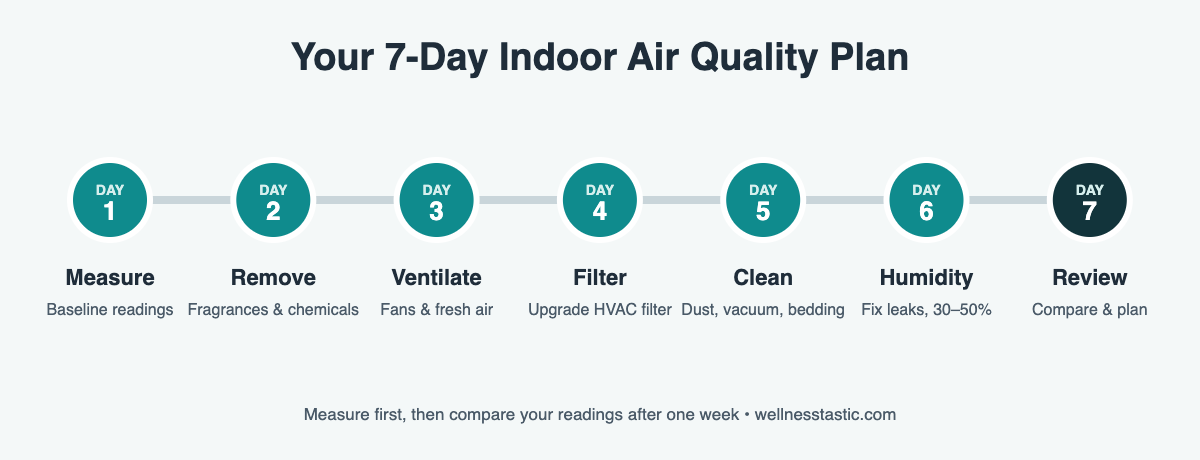
Your 7-Day Indoor Air Quality Action Plan
| Day | What to do |
|---|---|
| Day 1 | Set up a hygrometer or air quality monitor and note your baseline readings. |
| Day 2 | Remove air fresheners, strong fragrances and unnecessary chemicals. Move stored chemicals outside. |
| Day 3 | Start using the range hood and bathroom fan every time. Open windows for 10–15 minutes if outdoor air is good. |
| Day 4 | Check your HVAC filter. Replace it and upgrade the rating if your system allows. |
| Day 5 | Deep clean: damp dust, HEPA vacuum and wash bedding in hot water. |
| Day 6 | Check humidity in every room, fix leaks and plan a dehumidifier if any area stays above 60%. |
| Day 7 | Compare your readings with Day 1. Decide whether an air purifier or better ventilation is your next step. |
For a room-by-room review you can print, use our indoor air quality checklist.
Frequently Asked Questions
What is the fastest way to improve indoor air quality?
Removing the source and ventilating is usually fastest. Stop the activity causing the problem, open windows if outdoor air is clean, and run exhaust fans. A HEPA air purifier sized for the room can then help reduce remaining airborne particles.
Does opening windows in winter help?
Yes, short bursts of ventilation, around 5 to 10 minutes with windows open on opposite sides, can refresh indoor air without losing too much heat. It is especially useful after cooking or when CO2 readings rise.
Do air purifiers really improve air quality?
HEPA air purifiers can reduce airborne particles such as dust, pollen, pet dander and smoke particles when they are sized correctly and run consistently. They do not remove all pollutants, and they work best combined with source control and ventilation. Read more in do air purifiers work.
How long does it take to improve indoor air quality?
Some changes work within minutes, such as ventilating after cooking. Others, like reducing dust and dust mites or bringing down humidity in a damp basement, can take days or weeks. Tracking readings over time is the best way to see progress.
What is the best way to improve air quality in a small apartment?
Focus on ventilation and source control first: use the kitchen and bathroom fans, avoid fragrances and keep humidity in check. A compact HEPA air purifier in the bedroom or main living area is often the most useful single purchase. See our guide to air purifiers for small rooms and apartments.
The Bottom Line
The best way to improve indoor air quality is through a series of small, practical steps. Start with the free habits, remove pollution sources, ventilate every time you cook or shower, keep humidity in the healthy range and upgrade your filtration. Measure before and after so you know what works in your home, and build from there.
Sources
- U.S. EPA: Care for Your Air, A Guide to Indoor Air Quality
- U.S. EPA: Guide to Air Cleaners in the Home
- U.S. EPA: What Is a MERV Rating?
- U.S. EPA: A Brief Guide to Mold, Moisture and Your Home
- AirNow.gov: Air Quality Index
This article is for general information only and is not medical advice. See our Disclaimer and How We Research.