Most of us think about air pollution as something that happens outside: traffic, smoke, smog. But the air inside your home matters just as much, because it is the air you breathe most. The U.S. Environmental Protection Agency (EPA) notes that Americans spend around 90 percent of their time indoors, and that levels of some pollutants indoors can be higher than outdoors.
The good news is that indoor air quality is something you can actually improve. You do not need to renovate your home or buy expensive equipment to start. In this complete guide, you will learn what indoor air quality means, what affects it, how to measure it, and the practical steps that make the biggest difference in a healthy home.
Key takeaways: The EPA recommends three core strategies for better indoor air: control pollution at the source, improve ventilation, and use air cleaning where it helps. Keep indoor humidity roughly between 30 and 50 percent, and use monitoring to find out what is really happening in your home rather than guessing.
What Is Indoor Air Quality?
Indoor air quality (IAQ) describes the condition of the air inside and around buildings, especially as it relates to the health and comfort of the people inside. In a home, it is shaped by three things: what gets released into the air, how much fresh air comes in, and how well the air is filtered or cleaned.
Good indoor air quality usually means low levels of airborne particles and gases, a comfortable humidity level, and enough fresh air that stale air and odors do not build up. Poor indoor air quality means one or more of those factors is out of balance, often without being obvious. Many common indoor pollutants have no smell and are invisible.
If you want to go deeper into the causes, our guide to indoor air pollution explains the main sources in detail.
Why Indoor Air Quality Matters at Home
Modern homes are built to be energy efficient. Tighter construction keeps heating and cooling costs down, but it can also trap pollutants inside if there is not enough ventilation. At the same time, everyday activities such as cooking, cleaning, using candles or air fresheners, and even showering all add something to the air.
According to the EPA, indoor air pollutants can be associated with a range of effects, from short-term irritation of the eyes, nose and throat, headaches and fatigue, to more serious long-term effects for some pollutants. Effects vary widely between people and depend on the pollutant, the amount and the length of exposure. That is why it makes sense to reduce unnecessary exposure, even when you feel fine.
Some groups may be more sensitive to poor indoor air, including young children, older adults and people with asthma, allergies or other respiratory conditions. If you have health concerns, talk to a qualified healthcare professional. This guide focuses on practical home improvements, not medical advice.
Common Indoor Air Pollutants and Where They Come From
Indoor air pollutants fall into a few main groups. Knowing where each one comes from is the first step to controlling it.
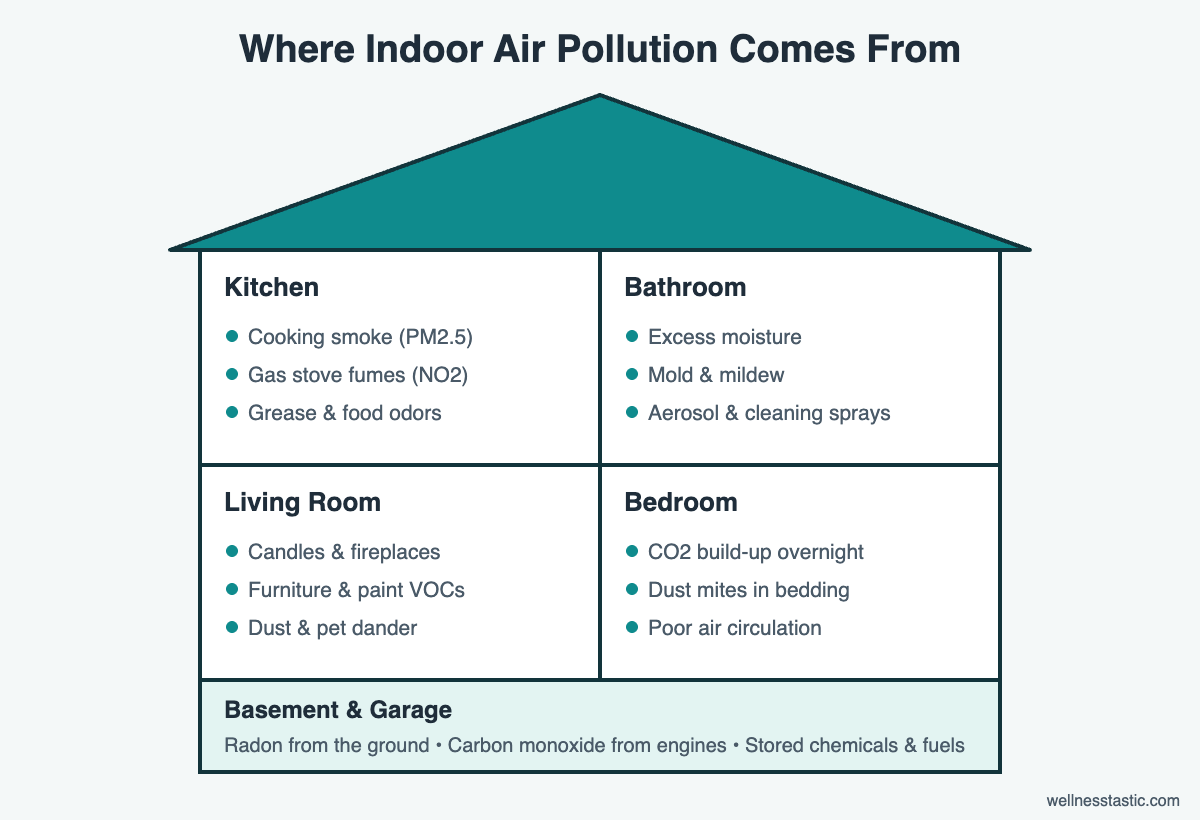
| Pollutant | Common household sources | What helps most |
|---|---|---|
| Fine particles (PM2.5) | Cooking, candles, fireplaces, smoking, wildfire smoke drifting indoors | Range hood vented outside, HEPA filtration, source reduction |
| Dust, pet dander and pollen | Pets, carpets, bedding, open windows during pollen season | Regular cleaning, HEPA vacuum, HVAC filter, air purifier |
| Volatile organic compounds (VOCs) | Paints, varnishes, new furniture, cleaning products, air fresheners, some hobby supplies | Choose low-VOC products, ventilate, activated carbon filtration |
| Carbon dioxide (CO2) | People breathing in closed rooms | More fresh air ventilation |
| Nitrogen dioxide (NO2) and combustion gases | Gas stoves, unvented heaters, attached garages | Vent appliances outdoors, use exhaust fans |
| Carbon monoxide (CO) | Faulty furnaces, water heaters, generators, vehicles in garages | Proper maintenance, CO alarms, never run engines indoors |
| Mold and moisture | Leaks, condensation, poor bathroom ventilation, high humidity | Fix water problems, control humidity, clean up mold |
| Radon | Naturally occurring gas entering through the ground | Testing, and mitigation by a qualified professional if needed |
Most homes have a mix of these. The ones that matter most in your home depend on how it is built, how you heat and cook, whether you have pets, and even the climate you live in.
Signs Your Home May Have Poor Indoor Air Quality
Because many pollutants are invisible, the signs of poor indoor air quality are often indirect. Common clues include:
- Stuffy or stale air, especially in bedrooms in the morning
- Lingering cooking smells or odors that do not clear quickly
- Condensation on windows, damp spots or a musty smell
- Visible mold on walls, ceilings, window frames or in bathrooms
- Dust building up quickly on surfaces
- Symptoms such as irritated eyes or headaches that seem to improve when you leave home
None of these proves there is a problem on its own, and symptoms can have many other causes. But if you notice several of them, it is worth investigating. Our guide to the signs of poor indoor air quality walks through each one and what to check next.
How to Measure Indoor Air Quality
Guessing is the biggest mistake people make with indoor air. A room can feel fine and still have high particle levels after cooking, or high CO2 after a night with the door closed. Measuring gives you facts, and shows you whether your changes are working.
What a home air quality monitor can track
| Measurement | What it tells you | Why it is useful |
|---|---|---|
| PM2.5 | Fine airborne particles | Shows the impact of cooking, smoke and filtration |
| CO2 | How much fresh air a room is getting | A practical ventilation indicator, especially in bedrooms |
| VOCs (total) | A general signal for chemical gases | Helps spot spikes from cleaning, painting or new furniture |
| Humidity | Moisture level in the air | Helps you keep humidity in a healthy range |
| Temperature | Room temperature | Comfort, and context for humidity readings |
Consumer monitors are useful for spotting trends and spikes, but they are not laboratory instruments. Treat readings as a guide, compare changes over time, and do not panic over a single high number. You can learn more in our guide on how to test indoor air quality at home, and compare devices in our roundup of the best indoor air quality monitors.
Tests a monitor cannot replace
- Carbon monoxide: use dedicated CO alarms. A general air quality monitor is not a safety device.
- Radon: requires a specific radon test kit or a professional test. The EPA recommends fixing homes at or above 4 picocuries per liter (pCi/L).
- Hidden mold: if you suspect mold behind walls or under floors, a qualified inspector is the right step.
The 3 Core Strategies to Improve Indoor Air Quality
The EPA describes three main strategies for improving indoor air. Think of them in this order, because the first one usually has the biggest impact.
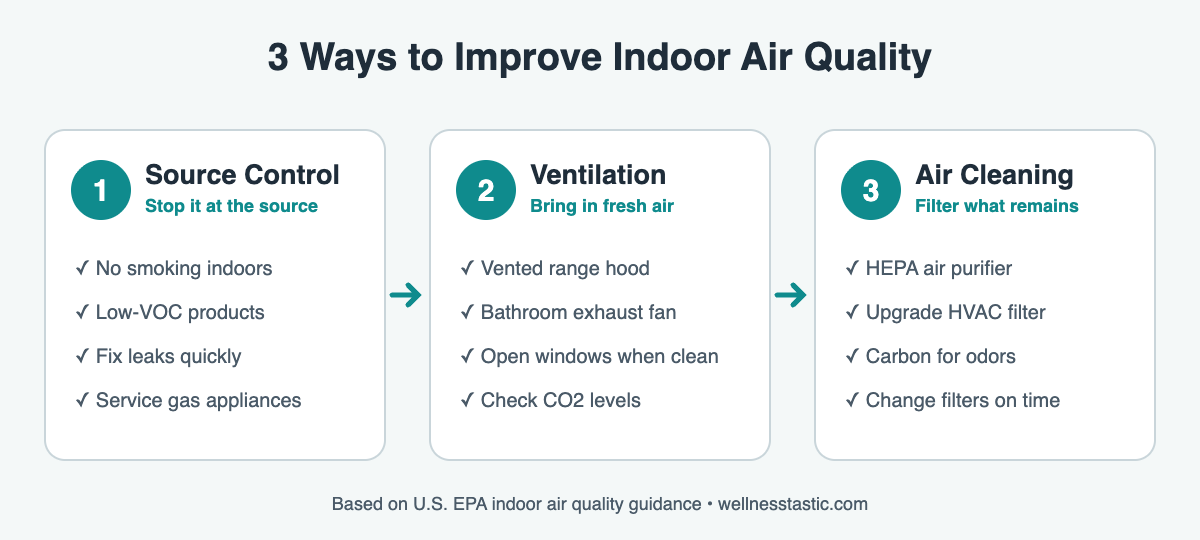
1. Source control: stop pollution before it starts
The most effective way to improve indoor air is to reduce what goes into it in the first place. Filtration can only remove part of a pollutant once it is already in the air.
- Do not allow smoking indoors.
- Choose low-VOC or zero-VOC paints, finishes and adhesives.
- Use fragrance-free cleaning products where possible and avoid heavy use of air fresheners and scented candles.
- Store paints, solvents and fuels outside the living space, ideally in a detached shed.
- Have fuel-burning appliances such as furnaces and water heaters inspected regularly.
- Fix leaks and water damage quickly to prevent mold.
- Let new furniture and mattresses air out in a well-ventilated space.
2. Ventilation: bring in fresh air
Ventilation dilutes pollutants that build up indoors and removes moisture. Even a few simple habits make a difference:
- Use a range hood that vents outdoors every time you cook, especially on a gas stove, and let it run for a few minutes after.
- Run the bathroom exhaust fan during and after showers.
- Open windows when outdoor air quality and weather allow.
- Keep bedroom doors slightly open at night or check CO2 levels to see whether the room needs more air.
- Ask an HVAC professional whether your system can bring in fresh outdoor air, or whether a mechanical ventilation system makes sense for your home.
Remember that outdoor air is not always clean. During wildfire smoke events or high pollution days, it is better to keep windows closed and rely on filtration.
3. Air cleaning: filter what remains
Once you have reduced sources and improved ventilation, air cleaning helps remove particles that remain. There are two main options: your central HVAC filter and portable air purifiers.
Air purifiers with true HEPA filters are designed to capture airborne particles such as dust, pollen, pet dander and smoke particles. Models with activated carbon can also reduce some odors and gases. However, as the EPA points out, no air cleaner removes all pollutants, and air cleaning works best alongside source control and ventilation, not instead of them. Read more in our guide on whether air purifiers really work.
Keep Humidity in the Right Range
Humidity is one of the most overlooked parts of indoor air quality. Too much moisture encourages mold and dust mites. Too little can make the air feel dry and uncomfortable.
The EPA recommends keeping indoor relative humidity below 60 percent, ideally between about 30 and 50 percent. An inexpensive hygrometer, or the humidity sensor in an air quality monitor, will tell you where your home stands.
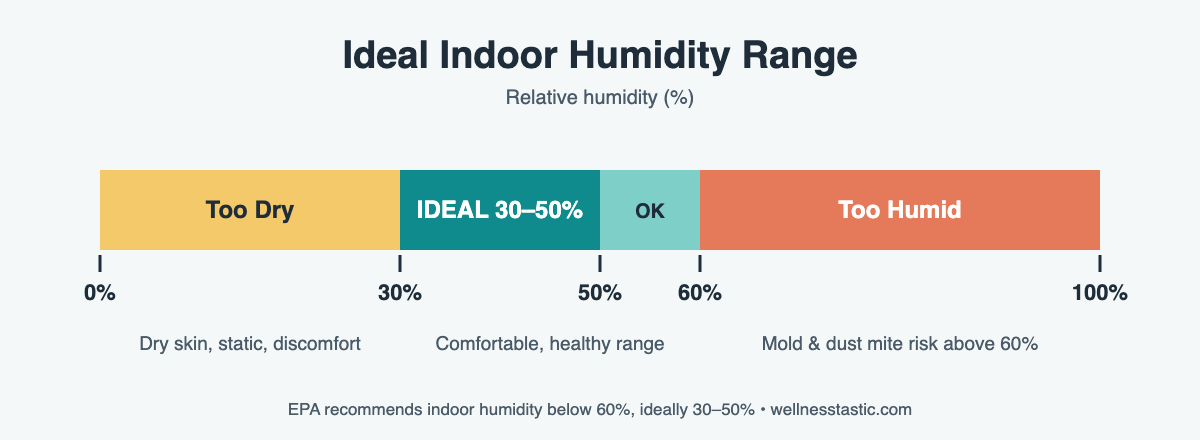
- If humidity is high: use exhaust fans, fix leaks, dry wet areas within 24 to 48 hours, and consider a dehumidifier in basements or damp rooms.
- If humidity is low: a humidifier can help in dry winter months, but keep it clean and avoid pushing humidity too high.
As the EPA explains in its mold guidance, moisture control is the key to mold control. An air purifier alone will not solve a mold problem if the moisture source remains.
Choosing an Air Purifier: What Really Matters
If you decide an air purifier makes sense for your home, focus on performance data rather than marketing claims. These are the factors that matter most:
- CADR (Clean Air Delivery Rate): tells you how much filtered air the purifier delivers. Higher is better for larger rooms. Learn more in our CADR rating guide.
- Room size: match the purifier to the actual room where you will use it.
- Filter type: true HEPA for particles, and activated carbon if odors or smoke are a concern.
- Noise: especially important for bedrooms, where you may run it overnight.
- Filter cost: replacement filters are an ongoing cost, so check the price and replacement schedule before buying.
- Ozone: avoid ozone generators, which the EPA warns against, and look for models that meet California (CARB) ozone emission limits.
Quick room size guide
The EPA provides a simple estimate for the minimum smoke CADR to look for, based on room area and a standard 8-foot ceiling:
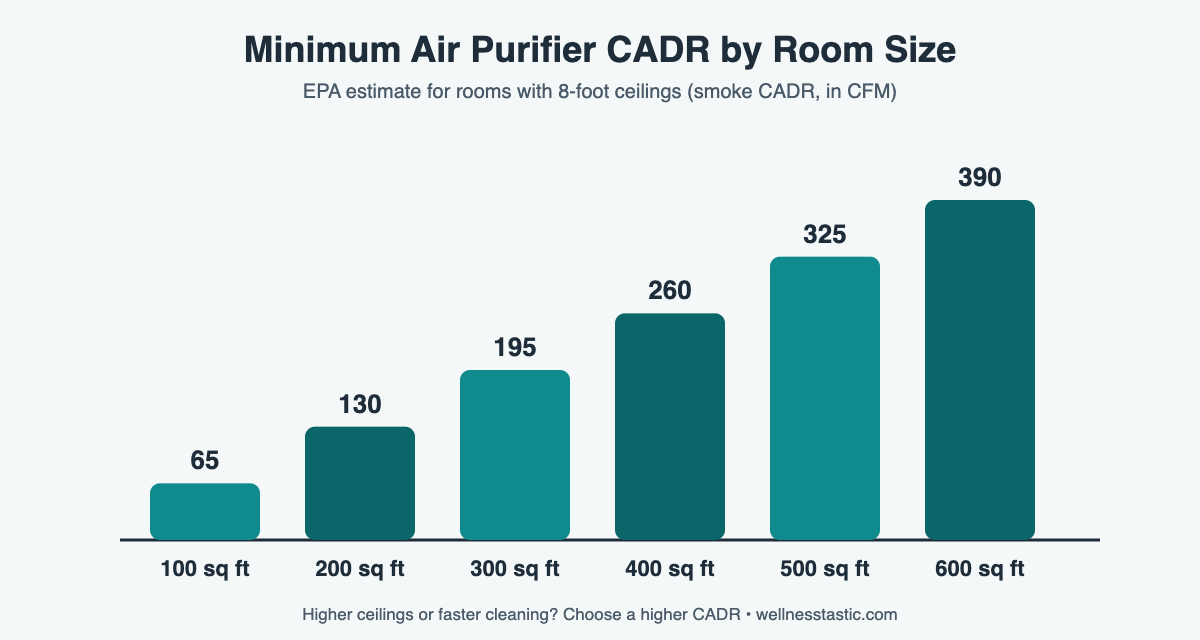
| Room size (sq ft) | Minimum CADR (CFM) |
|---|---|
| 100 | 65 |
| 200 | 130 |
| 300 | 195 |
| 400 | 260 |
| 500 | 325 |
| 600 | 390 |
For rooms with higher ceilings, or if you want faster cleaning, choose a higher CADR. Not sure which size you need? Our guide on what size air purifier you need explains it step by step, and our best air purifiers buying guide compares top options.
Don’t Forget Your HVAC Filter
If your home has central heating or air conditioning, the filter in your system cleans air throughout the house every time the fan runs. Upgrading and regularly changing this filter is one of the simplest whole-home improvements.
Filters are rated using the MERV scale. The EPA suggests using a MERV 13 filter, or the highest rating your system can handle without restricting airflow. Check your system manual or ask an HVAC technician before upgrading. Our guide to MERV ratings explains the numbers.
- Check your filter monthly and replace it as recommended, often every 1 to 3 months.
- Make sure the filter fits snugly so air does not bypass it.
- Consider running the system fan more often when air quality is poor, if your system allows.
Room-by-Room Indoor Air Quality Tips
Kitchen
- Use a range hood vented outdoors whenever you cook.
- Cook on back burners, where hoods capture more.
- Keep a window cracked when cooking without a hood.
Bedroom
- Check CO2 overnight to see if the room gets enough fresh air.
- Wash bedding weekly in hot water to reduce dust mites.
- A quiet air purifier sized for the room can help reduce airborne particles.
Bathroom
- Run the exhaust fan during showers and for about 20 minutes after.
- Dry wet surfaces and fix leaks promptly.
Living room
- Vacuum regularly with a HEPA-filter vacuum.
- Limit candles, incense and scented sprays.
- Keep humidity in the 30–50% range.
Basement and garage
- Watch for dampness and use a dehumidifier if needed.
- Store chemicals and fuels away from living spaces.
- Never run a car or generator in an attached garage.
Want a printable version? Use our indoor air quality checklist to review your home room by room.
When to Call a Professional
Many improvements are simple DIY steps, but some situations need expert help:
- Your radon test shows 4 pCi/L or higher.
- You have a large area of mold, often described as more than about 10 square feet, or mold linked to hidden water damage.
- A CO alarm goes off. Leave the home immediately and call 911 or your fire department.
- You smell gas. Leave and contact your gas utility or emergency services from outside.
- Your heating system, chimney or other fuel-burning appliances have not been inspected recently.
A Simple Action Plan to Get Started
- Measure: get a basic air quality monitor or hygrometer and watch readings for a week.
- Remove sources: cut out smoking, strong fragrances and unnecessary chemicals.
- Ventilate: use kitchen and bathroom exhaust fans every time.
- Control humidity: aim for roughly 30–50%.
- Upgrade filtration: use the best HVAC filter your system supports, and add an air purifier where you spend the most time.
- Test for radon and install CO alarms if you have not already.
- Re-check: compare your readings to see what improved.
For more ideas, read our full guide on how to improve indoor air quality at home.
How to Read Your Air Quality Monitor
Once you have a monitor, the numbers can feel confusing at first. Instead of chasing a perfect score, focus on patterns: when do readings rise, how high do they go, and how quickly do they come back down?
PM2.5 (fine particles)
Lower is better. In most homes, PM2.5 stays low most of the day and then spikes during cooking, burning candles or when smoke drifts in from outside. A spike that clears within an hour after you turn on the range hood or air purifier is normal. Readings that stay elevated for long periods suggest you need better ventilation or filtration, or that there is an ongoing source.
CO2 (carbon dioxide)
Outdoor air is typically around 400 to 450 parts per million (ppm). CO2 rises indoors as people breathe, so it works as a helpful sign of how much fresh air a room is getting. Many building professionals use levels that stay above roughly 1,000 ppm as a signal that ventilation could be improved. CO2 at these levels is mainly a ventilation indicator rather than a direct hazard, so treat it as a prompt to bring in more fresh air.
VOCs
Most consumer monitors report total VOCs as an index or a rough estimate rather than measuring specific chemicals. That makes them best for spotting changes. If VOC readings jump after cleaning, painting or bringing in new furniture, it is a sign to ventilate and to consider lower-emission products next time.
Humidity
Aim for roughly 30 to 50 percent. Readings that regularly climb above 60 percent, especially in bedrooms, basements and bathrooms, are worth addressing to reduce the risk of mold and dust mites.
Indoor Air Quality Through the Seasons
Indoor air changes throughout the year. Adjusting your routine with the seasons helps you stay ahead of common problems.
Winter
Homes are closed up and heating systems run constantly, so ventilation drops and CO2 and cooking pollutants can build up. Air often becomes very dry. Keep exhaust fans in use, replace your HVAC filter on schedule, and use a clean humidifier only if humidity falls well below 30 percent. This is also the best time to test for radon, as homes are sealed.
Spring
Pollen season can bring outdoor allergens inside through open windows, shoes, clothing and pets. On high pollen days, keep windows closed, run filtration, and wash bedding more often. Spring is also a good time for a deep clean and an HVAC service.
Summer
Humidity is usually the main challenge. Air conditioning helps remove moisture, but basements and bathrooms may still need a dehumidifier. Watch for condensation around cool surfaces and ductwork.
Wildfire season
In many parts of the U.S., wildfire smoke can affect indoor air, even far from the fire. When outdoor air quality is poor, keep windows and doors closed, set your HVAC to recirculate if possible, use the highest-rated filter your system supports, and run a portable HEPA air purifier in the room where you spend the most time.
Common Indoor Air Quality Myths
- Myth: If the air smells fine, it is fine. Many pollutants, including carbon monoxide, radon and fine particles, have no smell.
- Myth: Air fresheners clean the air. Most air fresheners mask odors by adding fragrance chemicals to the air rather than removing anything.
- Myth: An air purifier solves everything. Purifiers help with airborne particles, and carbon filters with some odors, but they cannot fix moisture problems, gas leaks or radon. Source control and ventilation come first.
- Myth: Opening a window is always better. Fresh air helps most of the time, but not during wildfire smoke events, high pollen days or when outdoor pollution is high.
- Myth: New homes have better air. New construction and new furnishings can release more VOCs for months, and tighter homes need deliberate ventilation.
Understanding these basics helps you spend money on the things that actually work. For a practical starting point, see our guide on air quality monitors vs air purifiers to decide which one you need first.
Frequently Asked Questions
What is considered good indoor air quality?
Good indoor air quality generally means low levels of airborne particles and gases, relative humidity around 30–50%, and enough ventilation that the air does not feel stale. There is no single number that defines it, so it helps to track several measurements such as PM2.5, CO2 and humidity over time.
Is indoor air really worse than outdoor air?
It can be. The EPA notes that indoor levels of some pollutants can be higher than outdoor levels, largely because of indoor sources and limited ventilation. It depends on the home, the activities inside and outdoor conditions.
Can houseplants clean indoor air?
Houseplants are pleasant to have, but research suggests you would need an impractical number of plants to meaningfully clean the air in a typical home. Ventilation and filtration are far more effective.
Do I need an air purifier in every room?
Not necessarily. Start with the rooms where you spend the most time, such as the bedroom and living room. Combined with a good HVAC filter and ventilation, that is often enough.
How often should I check indoor air quality?
A continuous monitor gives the best picture. If you use spot checks, check during different activities such as cooking, overnight in bedrooms, and during seasonal changes. Test for radon at least once, and again after major renovations.
The Bottom Line
Better indoor air quality does not come from one gadget. It comes from reducing pollution at the source, letting fresh air in, keeping humidity under control and filtering what remains. Start by measuring what is happening in your home, make a few simple changes, and build from there. Your home should be the place where you breathe easiest.
Sources
- U.S. EPA: Care for Your Air, A Guide to Indoor Air Quality
- U.S. EPA: Guide to Air Cleaners in the Home
- U.S. EPA: What Is a MERV Rating?
- U.S. EPA: A Brief Guide to Mold, Moisture and Your Home
This article is for general information only and is not medical advice. See our Disclaimer and How We Research.